Provence · September 2026
Autumn in Provence: 5 Landscapes Where Colors Explode
Summer’s blinding lavender haze fades, tourists thin out, and something unexpected happens: Provence stops being purple and explodes into gold, rust, and crimson. If you’ve only seen this region in high summer, you haven’t really seen it at all.
Autumn here isn’t the muted, melancholy affair of northern Europe. It’s warm, saturated, and alive. Vineyards turn the color of fire. Plateaus glow amber under slanting light. Villages that baked white in July suddenly nestle into forests of copper and bronze. And the air—crisp, herbal, smelling of wood smoke and fermenting grapes—feels like the landscape itself is exhaling after months of heat.
Here are five landscapes where Provençal autumn reaches its visual peak. Grab a camera, lace up your boots, and go see them before the colors fade.
The Dentelles de Montmirail: Jagged Peaks Meet Golden Vines
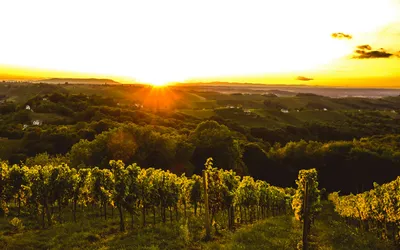
These limestone needles rise abruptly from the northern Vaucluse, their pale grey spires framed by vineyards that ignite in early October. The contrast is absurd: ancient, mineral rock against rows of vines turning gold, orange, deep red. It’s geology versus viticulture, and both win.
Park in Gigondas or Suzette and walk (or drive, if you’re lazy) the narrow D90 that loops through the Dentelles. Every bend offers a postcard: terraced vines climbing toward the peaks, isolated stone huts (bories) half-buried in color, and Mont Ventoux brooding in the distance. Early morning mist clings to the valleys, burning off by 9 a.m. to reveal the full palette.
The vendange (grape harvest) typically runs late September to early October here, so you might catch workers moving through the vines with secateurs and crates, dogs dozing in the shade, tractors hauling loads to the cave coopérative. Some estates—ask around in Gigondas—let visitors watch the sorting tables or taste juice straight from the press, cloudy and sweet and still crackling with fermentation.
If you’re into wine, this is your moment. The Côtes du Rhône estates are at their most beautiful and accessible in fall, and the young vintage juice tastes like liquid autumn.
The Luberon Plateaus: Oak Forests and Endless Horizons
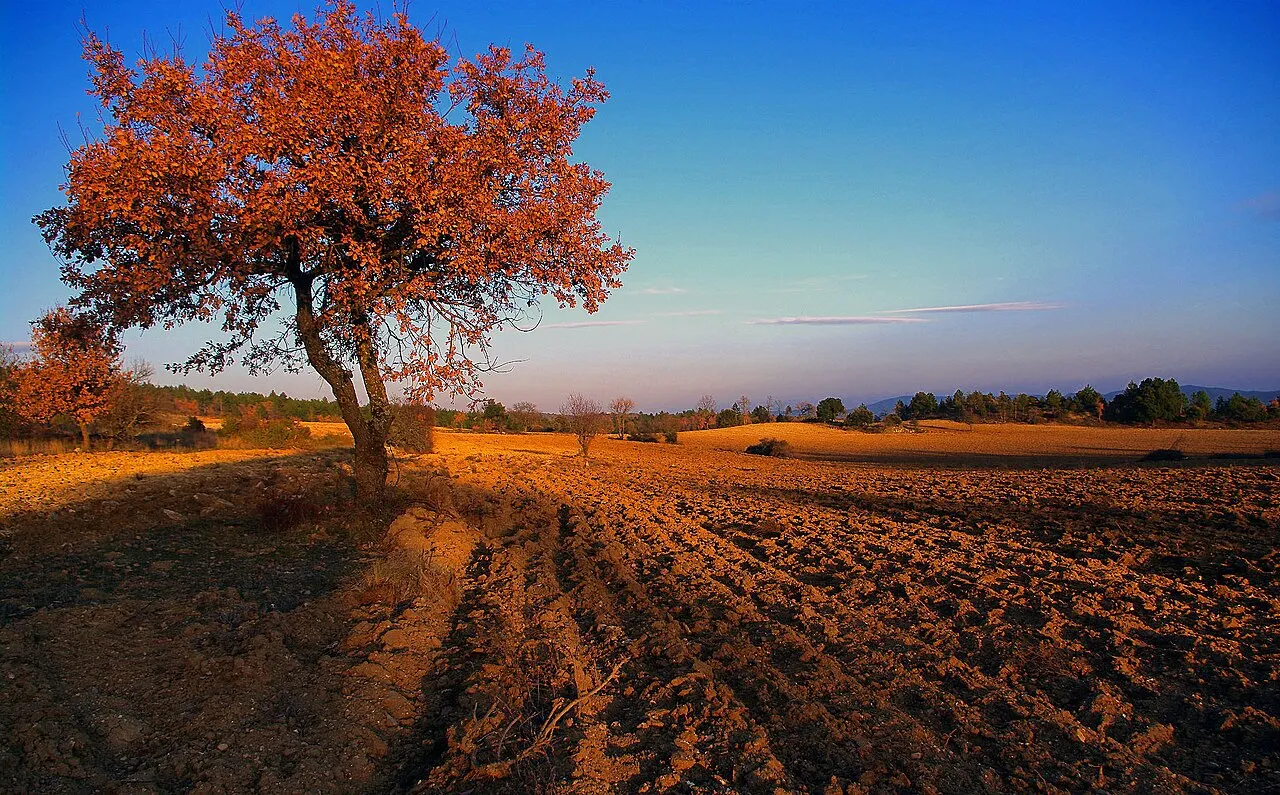
The Luberon isn’t one mountain; it’s a long, rumpled massif stretching east-west across the Vaucluse, split by the Combe de Lourmarin. In autumn, the higher elevations—around the Mourre Nègre summit and the plateaus near Auribeau—turn into an oak and maple forest that glows amber and rust.
The colors here are subtler than the Dentelles but more immersive. You’re in the forest, not looking at it from a distance. Trails wind through groves of downy oak (chêne pubescent), their leaves shifting from green to ochre to deep bronze. Underfoot: acorns, leaves, the occasional mushroom. Above: blue sky filtered through branches, light scattering in shafts.
The Mourre Nègre trail (starting from Auribeau) is the classic autumn hike. It’s around 10 km round-trip, moderate effort, and the summit panorama takes in the Luberon, Mont Ventoux, the Alps, and—on clear days—the Mediterranean. In October, the ascent passes through progressively deeper fall colors, peaking in the mixed forest just below the top.
Bring a picnic. Bring binoculars (raptors migrate through in September). And bring time—this isn’t a landscape to rush.
If you’re based in Avignon, the Luberon plateaus are an easy day trip, and returning to the city at dusk, with the ramparts glowing amber in the low sun, feels like closing a parenthesis. Our apartments in the Quartier des Teinturiers are a cozy base for fall exploration—quiet, central, with Damien and Lubna on hand for trail tips and restaurant recommendations.
The Sorgue Gorges: Water, Limestone, and Liquid Gold
The Sorgue River emerges full-grown from underground at Fontaine-de-Vaucluse, one of the world’s most powerful karst springs. In autumn, the gorges upstream and downstream from the source become a tunnel of color: plane trees, willows, and wild cherry turning gold and red, their reflections doubling on the water’s surface.
The path from Fontaine-de-Vaucluse toward the source is paved and easy, but keep going past the crowds. The footpath climbs above the gorge, offering views down into the turquoise pool where the Sorgue boils up from limestone depths. In October, the contrast between the cold blue-green water and the warm reds and golds of the foliage is almost violent.
For a longer walk, follow the Sorgue downstream toward L’Isle-sur-la-Sorgue. The trail hugs the riverbank, passing moss-covered rocks, old mills, and sections where the river splits into braided channels. Plane trees (platanes) arch overhead, their mottled bark and golden leaves creating a dappled, painterly light.
Photographers: bring a polarizer and shoot in soft light (overcast or late afternoon). The greens stay deep, the water glows, and the fall colors saturate without blowing out. Mornings can be misty—embrace it.
The Ochre Country Around Roussillon: Rust Cliffs Meet Amber Forests
Roussillon is famous for its ochre cliffs, which range from pale yellow to blood red depending on iron oxide content. In autumn, the surrounding forests of chestnut, oak, and pine turn shades that match the cliffs—amber, rust, bronze—and the whole landscape becomes a study in earth tones.
The Sentier des Ocres (Ochre Trail) inside Roussillon is short (around 30 minutes) but visually overwhelming: rust-red pinnacles rising from sandy paths, pine trees clinging to unstable slopes, and views out over the Luberon. In October, add the golden canopy of chestnuts and oaks around the village, and it’s almost too much color.
For a longer hike, try the trail from Roussillon to nearby Gargas, which passes through mixed forest and abandoned ochre quarries. The contrast between the deep reds of exposed cliff faces and the warm yellows of deciduous trees is surreal. Pack water—the trails are dry and dusty, even in fall.
After the hike, wander Roussillon’s tiny center. The village itself is built from ochre stone, so the buildings glow warm pink, orange, and red depending on the light. Late afternoon is magic hour: the low sun turns everything molten.
Pair this with a visit to Gordes, just a few kilometers north. Perched on a cliff edge, Gordes in autumn becomes a study in contrasts: pale stone village against the forested slopes of the Luberon, which by mid-October are painted in rust and gold.
Mont Ventoux’s Lower Slopes: Beech Forests and Shifting Light
Mont Ventoux’s bald, white summit is iconic, but the lower and mid-elevation slopes—covered in cedar, beech, and oak—are where autumn really performs. The beech forests on the northern slope (around Malaucène and Bédoin) turn a luminous golden-yellow in October, especially when backlit by afternoon sun.
The D974 road from Malaucène toward the summit passes through these forests. Park at any of the small pullouts and walk into the woods. The beech groves are cathedral-like: straight grey trunks, golden canopy, soft light filtering down. In calm weather, the silence is profound. In wind, the rustle of leaves is the only sound.
For a proper hike, take the trail from Le Barroux toward Suzette, which traverses the southern flank of Ventoux through mixed forest and open meadow. The views stretch south over vineyards and the Dentelles, and in October the color gradient—green vines below, gold forest mid-slope, grey limestone peaks above—is textbook Provence.
Ventoux is also a magnet for cyclists, and autumn is prime season: cooler temps, less traffic, and the forests at their most beautiful. If you ride, pack a jacket—descents can be chilly, and the summit is often 15°C colder than the base.
Practical Notes: When, What, and How
Autumn color in Provence builds through September and peaks in early to mid-October, with variation by elevation and microclimate. Vineyards change first (late September), followed by lower-elevation deciduous forests (early October), then higher beech and oak groves (mid-October). By early November, most leaves have dropped.
Weather is generally stable—expect daytime highs around 18-24°C, crisp mornings, and occasional mistral winds that strip clouds and sharpen the light. Rain is possible but rare. Pack layers: a fleece or light jacket for morning hikes, sunscreen for midday, and good shoes (trails can be rocky or dusty).
Photography is extraordinary in fall. The light is warm and directional, shadows are long, and the colors need minimal post-processing. Golden hour (first and last two hours of daylight) is even more dramatic than summer. For forests, try overcast days—the soft light brings out detail and depth.
Logistically, autumn is off-peak: accommodations are easier to book, trails are less crowded, and restaurants have space. If you’re planning a week in Provence, split your time between Avignon (culture, markets, food) and the countryside (hiking, wine, color). Our two apartments in Avignon’s Teinturiers quarter make an ideal base—Damien and Lubna know the back roads and can point you toward the best trails and viewpoints for current conditions.
Why Autumn, Why Now
Summer Provence is beautiful, but it’s also packed, hot, and expensive. Autumn Provence is quieter, cooler, and—arguably—more visually interesting. The light softens. The palette deepens. The landscape shifts from high contrast (purple lavender, white stone) to warm gradients (gold, rust, amber).
And there’s something about fall that suits this region. Provence isn’t precious or performative; it’s lived-in, worked, harvested. Autumn makes that visible. Vineyards being picked. Olive groves being netted. Forests shedding and preparing. It’s a season of transitions, and the landscapes reflect that—less postcard-perfect, more real.
So if you’ve been waiting for the ideal moment to visit, or if you’ve been here before and want to see it differently, come in October. Bring walking shoes, a camera, and an appetite. The colors won’t wait.
Frequently asked questions
When exactly does autumn color peak in Provence? +
Peak foliage typically arrives between late September and mid-October, though it varies by elevation and microclimate. Vineyards change first (early October), followed by deciduous forests at higher elevations. The window lasts around three weeks, so aim for the first half of October for maximum color.
Which areas have the best fall colors in the Vaucluse? +
The Luberon plateaus offer sweeping vistas with oak and maple forests, while the Dentelles de Montmirail combine jagged peaks with golden vineyards. The gorges around Fontaine-de-Vaucluse and Sorgue valley provide lush riverside color. For dramatic contrasts, try the slopes around Gordes where ochre cliffs meet amber woodlands.
Can I visit vineyards during harvest season? +
Absolutely—many Côtes du Rhône estates welcome visitors during vendange (harvest), typically late September to early October. You'll see workers among the vines, smell fermenting grapes, and some domains offer informal tastings of new vintage juice. Just call ahead; harvest schedules shift with weather.
Is autumn a good time to hike in Provence? +
It's arguably the best season. Temperatures drop to comfortable 18-24°C, trails are less crowded than summer, and the light is magic for photography. Pack layers—mornings can be crisp—and bring a camera. Popular routes like the Mourre Nègre loop or sentiers around Roussillon are stunning in fall.
What should I bring for autumn photography in Provence? +
Golden hour (first and last two hours of daylight) is even more dramatic in fall, so plan shoots around sunrise and late afternoon. A polarizing filter cuts haze and saturates colors. Overcast days work beautifully for forest interiors, while clear days suit vineyard panoramas. Bring a light jacket—morning mist is common and photogenic.
Are there autumn festivals or markets to experience? +
October brings vendange festivals in wine villages, chestnut roasts in the Luberon, and truffle season kickoffs. The regular Provençal markets continue but shift toward fall produce—squash, mushrooms, walnuts, and early truffles. Check local mairies for fête dates; they're often spontaneous and joyfully lo-fi.
Ready to come?
Stay 5 min from Avignon's historic centre
Two 3-star charm apartments, 2 min from rue des Teinturiers and 18 min from the Palais des Papes. Direct booking, no middlemen.