Lavender · November 2026
Lavender distillation in July-August: where to see the still
You smell lavender long before you understand it. On a hot July afternoon in Provence the scent drifts across a road, through the car window, and suddenly you want to know where it all goes. The answer is a still: a copper or steel vat, a plume of steam, and a stream of clear liquid with a thin film of oil on top. If you’re staying in Avignon in summer, seeing that process up close is one of the most satisfying things you can add to a trip, and it’s far more interesting than a quick photo in a field.
This guide covers what actually happens in a lavender still, when the window for seeing it opens and closes, and how to fit a visit into a day from Avignon without overthinking it.
What actually happens in a lavender still
The principle is simple, which is part of the charm. Freshly cut lavender stems are packed into a large vat. Steam is pushed up through the plant material, and as it passes through, it picks up the tiny droplets of aromatic oil held in the flowers. That scented steam travels into a condenser, where it cools back into liquid.
What comes out is two things that don’t mix. The essential oil floats on top, and the water underneath becomes what’s called a hydrosol, or floral water. A small separating vessel at the end lets the oil be drawn off while the water drains away. If you stand at the right spot, you can actually watch the oil gather on the surface, and it’s oddly hypnotic.
A few things are worth knowing before you go:
- It takes a lot of plant for a little oil. Depending on the plant and the method, you’re looking at many kilos of flowering stems to make a single kilo of oil, and fine lavender needs more plant than lavandin does. Treat any exact figure you hear as an approximation.
- The spent stems don’t just vanish. Distilleries often reuse or compost them, though practice varies from place to place.
- The smell at the still is different from the smell in the field. It’s warmer, greener and a little smoky, because you’re smelling steam and cut stems rather than flowers in the sun.
If the technical side interests you, ask questions. Most people who work at a distillery have answered every question you can think of, and they tend to enjoy the curious ones.
When to go: the July-August window
Lavender doesn’t bloom on a calendar. It follows altitude, variety and the weather. In broad terms, fine lavender grown higher up tends to flower and be cut first, while lavandin, the hybrid that covers much of the lower ground, usually comes a bit later. Both are harvested through the summer, which is why July and August are the months to aim for.
The stills are tied to the harvest. When the cut lavender comes in, it has to be processed quickly, so distillation happens around the same time. That means:
- Early to mid July is often a good moment for the first harvests and the first runs of the still, although this depends on the year.
- Late July and early August are usually the most reliable for seeing both the fields and the distillation in the same trip.
- By late August, much of the cutting is finished, and what’s left may be less spectacular. Some places still offer visits and shop displays, but the working still may be quiet.
Because timing shifts each year, don’t plan around an exact date you’ve read somewhere. Look at current local information, and if something matters to you, ask the distillery directly. A hot, dry spell can bring the harvest forward, and a cool or wet one can push it back.
If you want to understand the fields side of the story before you go, our guide to lavender fields in Provence walks through what to look for and how to visit respectfully.
Where to see a still in action
There are several kinds of places where you can see lavender being distilled, and they offer quite different experiences.
- Working farm distilleries. Growers who distil their own harvest sometimes open their yard to visitors. You may see the vat being filled or emptied, with a short explanation of what’s happening. These can feel the most authentic, but hours can be limited and informal.
- Visitor-focused distilleries. Some sites are set up for tourists, with guided tours, demonstrations at set times, and a shop. They are easier to plan around and often better for families or groups, even if they feel a bit more polished.
- Museums and heritage sites. A few places show older equipment and explain how the craft developed. They’re good for context, though a museum may not have a still running at the moment you arrive.
We’ve put together a longer overview of specific options in our guide to lavender distilleries in Provence. Start there if you want names and a sense of how each one works.
Whichever type you choose, a few practical points apply:
- Check whether a demonstration is running on the day you plan to visit. Opening a shop is not the same as running a still.
- Ask whether you can watch from a safe distance. Steam and hot metal are normal in a working distillery, and staff will tell you where to stand.
- Be polite with photos. Most places are happy for you to take pictures, but it’s good manners to ask before photographing people or work in progress.
How to plan a visit from Avignon
Avignon is a handy base for this kind of outing. You can spend a morning in the city and then head out, or leave early and be back for dinner. What matters is working out a simple plan rather than trying to cover everything.
A relaxed day might look like this:
- Leave in the morning. It’s cooler, the light is better for the fields, and the early part of the day is often when harvesting and distillation are in full swing.
- Pick one distillery and one field or village. Two stops are plenty, and you’ll enjoy both more than if you chase four.
- Keep lunch flexible. A market or a simple terrace somewhere along the way tends to work better than a fixed reservation if your timing shifts.
- Plan the drive back for the late afternoon, and don’t forget water, a hat and sun protection. Summer in Provence can be properly hot.
If you’d like ideas for broader routes into the region, our piece on exploring Provence and the Luberon from Avignon covers how to build a day around a few stops. For a higher, cooler landscape that’s closely tied to lavender, our guide to the Sault plateau and Luberon is worth a read before you decide where to head.
Check road conditions and opening times locally before you leave, because plans that looked perfect on paper can change in July. And don’t fill the car with fragile purchases and then leave it in the sun, because heat and essential oils don’t go well together.
What to bring home, and what to skip
Once you’ve seen the still, you’ll probably want a souvenir. Lavender products are everywhere in Provence, but they’re not all equal, so a little knowledge helps.
- Read the label. Look for whether the product says fine lavender or lavandin. Both are legitimate, but they smell different and are priced differently, so you should know which you’re paying for.
- Ask about origin. A distillery shop is a good place to ask where the lavender was grown and distilled. Regional quality labels exist for lavender oil from Haute-Provence, and if that matters to you, ask what the label means for the specific product in front of you.
- Be wary of suspiciously cheap bottles. Very low prices on essential oil, especially in tourist areas, can mean the product is lavandin, blended, or not what you assumed. That’s not always a problem, but it’s worth knowing.
- Try the hydrosol. The floral water left over from distillation is lighter than the oil, and many people enjoy it as a gentle, fresh-smelling spray for the face or for a hot room.
- Think beyond oil. Dried lavender, honey, and small culinary items are easy to pack. If you like cooking, our ideas for Provençal lavender recipes show how to use lavender in the kitchen without it tasting like soap.
Pack bottles carefully, keep them upright, and wrap them in clothes. An essential oil that leaks into a suitcase is a memory you’ll smell for a long time.
Make Avignon your base for lavender season
A distillery visit works best when you have somewhere calm to come back to. Staying inside the old walls means you can head out early, return in the heat of the afternoon, and then wander the city in the evening.
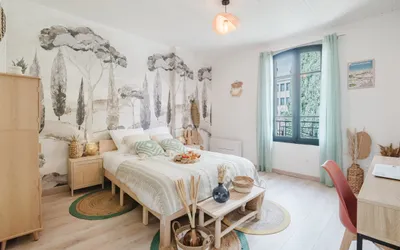
Our two apartments are in Avignon intra-muros, in the Quartier des Teinturiers, and are hosted by us, Damien and Lubna. Lavande Évasion is a one-bedroom apartment, and Lavande Dorée has two bedrooms, so you can choose whichever suits your group. If you’re planning a summer trip around the lavender harvest, you’re welcome to take a look and see whether either one fits your dates.
However you plan it, go once to a working still if you can. It’s a small, simple thing, but you’ll never smell lavender the same way afterwards.
Frequently asked questions
When can I see lavender being distilled? +
Mostly during the harvest, which runs around July and August. Fine lavender at higher altitude tends to be cut a bit earlier than lavandin on lower ground, and the weather can shift things by days or even weeks. Check with the distillery before you go.
Do distilleries run every day in summer? +
Not necessarily. Some distil whenever there is a fresh harvest to process, while others offer set demonstrations or guided visits at specific times. Opening hours change from year to year, so confirm locally rather than relying on an old listing.
What is the difference between lavender and lavandin oil? +
True fine lavender and lavandin are different plants, and lavandin is a hybrid that gives more oil per plant. Lavandin usually smells sharper and more camphor-like, and it is generally the cheaper of the two. Labels should tell you which one you are buying.
Is a distillery visit good for children? +
It can be, as long as you keep it short and stay out of the way of the equipment. Steam and hot metal are part of the process, so keep little ones close and follow the staff's instructions. The smell alone tends to hold their attention.
Can I do a distillery visit as a day trip from Avignon? +
Yes, it works well as a day out, especially if you combine it with a lavender field or a village stop. Plan your route, check opening times, and start early so you are not driving in the hottest hours.
Ready to come?
Stay 5 min from Avignon's historic centre
Two 3-star charm apartments, 2 min from rue des Teinturiers and 18 min from the Palais des Papes. Direct booking, no middlemen.