Avignon · June 2026
Villeneuve-lès-Avignon: the 'twin city' 10 min away
The forgotten city of cardinals
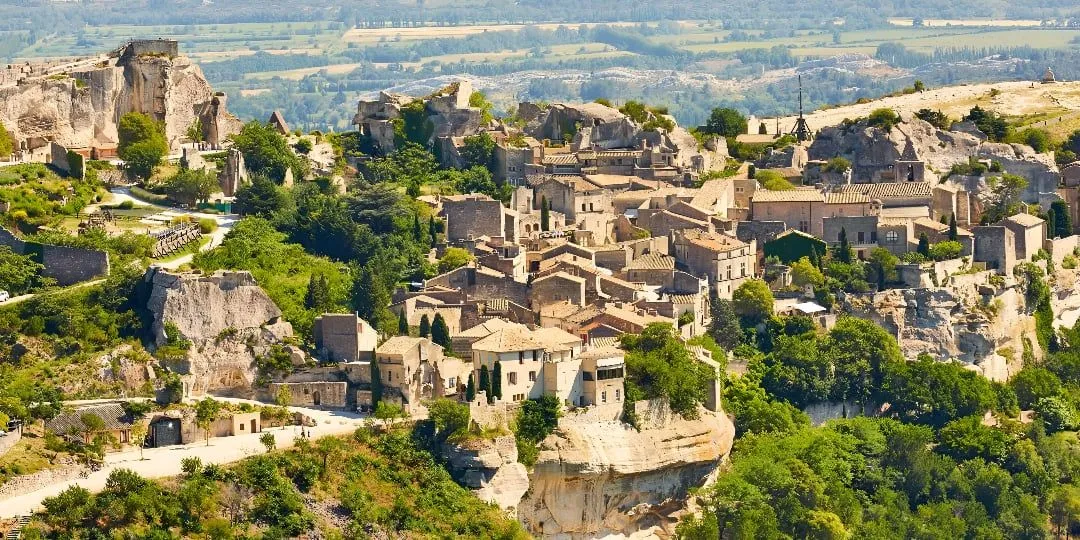
When you cross the Rhône from Avignon, you change departments (welcome to Gard), but you remain in the same story. Villeneuve-lès-Avignon isn’t just a suburb: it’s the hidden face of medieval papacy, the refuge of cardinals who built their palaces here while the pope reigned from the other side of the river. Today, this fortified village of 12,000 inhabitants offers what Avignon has sometimes lost in the tourist influx: quiet lanes, secret gardens, and preserved authenticity — all ten minutes from your base in the Quartier des Teinturiers.
The contrast strikes you upon arrival. Where Avignon buzzes with terrace activity and festivals, Villeneuve cultivates an almost monastic gentleness. Its honey-colored stones, little squares shaded by century-old plane trees, and panoramas over the city of popes make it an ideal escape for a half-day or full day.
Fort Saint-André: the balcony over the Rhône valley
Fort Saint-André dominates Villeneuve from Mont Andaon. Built in the 14th century by Jean le Bon to assert the French kingdom’s presence facing papal lands, it deploys nearly a kilometer of crenellated ramparts. But beyond the military architecture, it’s mainly the panorama that justifies the climb.
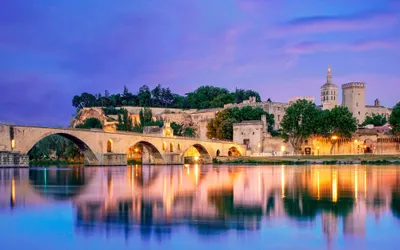
From the twin towers at the entrance (accessible after climbing spiral staircases), the view embraces 360 degrees: Avignon and its Palais des Papes in majesty, Rocher des Doms, Pont Saint-Bénézet launching toward the river, and on clear days, Mont Ventoux on the horizon. Below, Villeneuve’s tiled roofs cascade down to the Rhône banks. Late afternoon light, golden and low, transforms the landscape into a living painting.
Inside the fortified enclosure, Mediterranean terraced gardens invite strolling. Olive trees, cypresses, lavender, and rosemary compose a green setting where silence is only disturbed by cicada song in summer. Saint-André Benedictine Abbey, nestled in the fort’s heart, now houses a religious community and isn’t open for visits, but its Italian-style gardens (open to the public) are worth the trip alone.
Practical info: Open year-round (hours vary by season). Admission around €6 (reduced €4). Count 1.5 to 2 hours for a complete visit with garden strolling.
Chartreuse du Val de Bénédiction: France’s largest Carthusian monastery
Founded in 1356 by Pope Innocent VI, Chartreuse du Val de Bénédiction is a place outside time. With its three cloisters, monks’ cells, and enclosed gardens, it testifies to medieval monastic life in all its rigor and beauty.
The grand cloister, 80 meters long, impresses with its proportions. Each monk’s cell opens onto this cloister: a small two-story house with its private garden, where the Carthusian lived in solitude and prayer. Today, some cells host contemporary art exhibitions, creating a striking dialogue between heritage and creation.
Pope Innocent VI’s tomb, in the church, is one of the rare papal funerary monuments outside Avignon. The 14th-century frescoes, though fragmentary, reveal the site’s artistic wealth at its peak. The small cloister, more intimate, shelters a central well and vaulted galleries where monks’ footsteps still seem to echo.
In summer, the Chartreuse becomes an Avignon Festival OFF venue: theater performances and concerts take over the cloisters, offering a contemporary cultural dimension to this centuries-old heritage. Even outside the festival, the site’s meditative atmosphere makes it a peaceful stop, far from tourist hustle.
Practical info: Open year-round except January 1 and December 25. Admission around €8 (reduced €6). Count 1.5 hours for the visit. Audio guide recommended to grasp the full historical richness.
Tour Philippe le Bel: sentinel of the Avignon bridge
At the end of the famous Pont Saint-Bénézet, on the Villeneuve side, Tour Philippe le Bel stood guard over the Rhône crossing. Built in the 14th century, this defensive tower marked the border between the French kingdom and papal lands. Today, it offers a plunging view over the bridge, river, and Avignon.
The climb (narrow stairs, 176 steps) rewards the effort: from the top terrace, the Avignon bridge reveals itself in all its symbolic dimension, its interrupted arches still seeming to want to cross the Rhône. The panorama complements Fort Saint-André’s, with a different angle on the city of popes.
The tower also houses a small exhibition on the bridge’s history and relations between Avignon and Villeneuve. You learn that the bridge originally had 22 arches and measured nearly 900 meters — a technical feat for the era. The Rhône’s fearsome floods gradually destroyed the structure over centuries.
Practical info: Open April to October. Admission around €3. Quick visit (30 to 45 min). Ideal as a complement to Pont Saint-Bénézet on the Avignon side.
Village stroll: cardinal residences and secret lanes
Beyond the landmark monuments, Villeneuve is discovered on foot, along cobbled lanes that climb and descend between former cardinal residences. These palaces, often transformed into private mansions or apartments, retain their Renaissance façades, studded doors, and flowery interior courtyards.
Place Jean-Jaurès, shaded by plane trees, concentrates café terraces and small shops. The Thursday morning market (place Charles-David) gathers local producers and artisans: a good time to taste Gard and Provence specialties, from Nîmes olives to Luberon goat cheeses.
Notre-Dame collegiate church, massive and austere, shelters a little-known treasure: a 14th-century ivory Virgin, a masterpiece of sculptural finesse. The Pierre-de-Luxembourg museum, installed in a cardinal residence, presents a medieval sacred art collection, including the famous Coronation of the Virgin by Enguerrand Quarton (1453), considered one of the summits of Provençal Gothic painting.
For a gourmet break, small streets around the square hide authentic bistros where you can enjoy daube avignonnaise or pieds-paquets, far from Avignon center’s tourist traps. Prices are often gentler than across the river, and the welcome warmer.
Gardens and viewpoints: green Villeneuve
Villeneuve also cultivates a surprising green dimension. Beyond Fort Saint-André’s gardens, several green spaces punctuate the village. Parc des Cordeliers, a former Franciscan convent, offers a summer oasis with its large trees and small outdoor theater.
Viewpoints along the climb to the Fort offer staggered views over Avignon and the valley. Shaded benches, picnic tables, and interpretive panels allow contemplative breaks. In June, when lavender begins blooming in private gardens, the scent mingles with flowering linden trees — a Provence concentrate steps from the Rhône.
For walkers, the Sentier des Belvédères (marked trail, about 5 km, moderate elevation) circles Mont Andaon connecting the main viewpoints. Start from the Fort parking, return through the village: count 2 hours of easy walking, ideal in late afternoon when light softens.
Villeneuve during the Avignon Festival
In July, Villeneuve vibrates to the Avignon Festival rhythm while maintaining a more relaxed atmosphere than its neighbor. Several venues host OFF performances: the Chartreuse, of course, but also chapels, private mansion courtyards, and pocket theaters.
Some festival-goers choose to stay in Villeneuve to enjoy calm after performances, while remaining minutes from Avignon venues. Bus 5 (Villeneuve ↔ Avignon) runs late into the evening during the festival. By car, Villeneuve parking lots are less saturated and often free, with shuttles to Avignon center.
Villeneuve’s night market, organized some July evenings on place Jean-Jaurès, offers local products, crafts, and small restaurants in a friendly atmosphere. A nice way to extend the evening after a show, without Avignon’s street crowds.
Practical info: access and planning
From Avignon:
- By car: 10 minutes via Pont Daladier (D900). Free parking at Fort Saint-André and near the Chartreuse.
- By bus: line 5 (TCRA), departure from Place Pie or bus station, stop at “Villeneuve centre” or “Fort Saint-André.” About 20 minutes, buses every 20-30 minutes.
- By bike: bike path along the Rhône, then sporty climb to the village (about 30 min from Teinturiers).
Tickets: A “Villeneuve Patrimoine” pass (around €12) gives access to Fort Saint-André, Chartreuse, and Tour Philippe le Bel. Valid one day, it pays for itself after two sites. On sale at the tourist office (place Charles-David) and at each monument.
Dining: Reservations recommended on weekends and in July. Restaurants on place Jean-Jaurès offer good value. For a picnic, Thursday morning market provides everything needed, and Fort gardens are perfect for outdoor lunch.
Accessibility: The village is hilly, with sometimes steep cobbled lanes. Fort Saint-André and Tour Philippe le Bel involve stairs (not wheelchair accessible). The Chartreuse is largely accessible, with ramps in the cloisters.
Combining Villeneuve with other visits
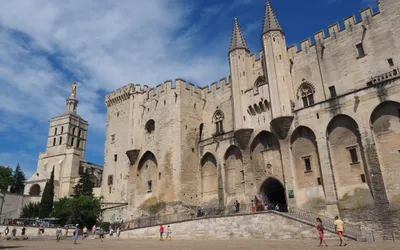
Villeneuve pairs perfectly with an in-depth Palais des Papes discovery: after exploring the palace in the morning, cross the Rhône for the afternoon in Villeneuve and admire the monument from the other bank. The contrast between papal power and the Chartreuse’s monastic serenity illustrates two facets of this historical period.
For a “papal heritage” day, chain together Palais des Papes, Pont Saint-Bénézet, Tour Philippe le Bel, and Chartreuse: a complete route tracing the Avignon popes’ epic and their cardinals in Villeneuve.
If you have several days, Villeneuve can also serve as a starting point toward Gard villages: Uzès (30 km), Pont du Gard (25 km), or Tavel and Lirac vineyards (20 km) are within reach. But that’s another escape, for another day.
Villeneuve off-season: authentic charm
While Villeneuve is pleasant in summer, it perhaps reveals its true face off-season. In autumn, when Gard vines redden and light softens, the village returns to its daily rhythm. Monuments are visited without queues, terraces welcome local regulars, and Fort gardens offer an autumn color palette.
In winter, clear cold days (the mistral blows strong!) produce exceptionally sharp panoramas: snow-covered Mont Ventoux seems within reach from the ramparts. Restaurants offer their slow-cooked dishes — daube, aïoli, soupe au pistou — and fireplaces crackle in bistros.
In spring, gardens explode with flowers: wisteria, old roses, iris, and peonies perfume the lanes. Thursday market overflows with asparagus, Carpentras strawberries, and fresh cheeses. It’s the ideal season for walks on Mont Andaon trails, before the big heat.
Planning your Villeneuve visit
Villeneuve-lès-Avignon isn’t a “must-see” excursion in the sense that everyone talks about it. It’s more a connoisseur’s discovery, an essential complement for anyone wanting to understand Avignon in all its historical complexity. By crossing the Rhône, you change banks, departments, atmosphere — but you remain in the same story, that of popes and cardinals who shaped this region in the 14th century.
From our apartments in the Quartier des Teinturiers, Villeneuve is immediately accessible: ten minutes by car, twenty by bus, half an hour by bike for the sporty. A half-day suffices for main sites, a full day allows savoring the stroll and local gastronomy. And if you’re looking for an unforgettable Avignon viewpoint for your vacation photos, Fort Saint-André awaits you, perched on its rocky spur, silent guardian of the Rhône valley.
Frequently asked questions
Why is Villeneuve-lès-Avignon called Avignon's 'twin city'? +
In the 14th century, when the popes settled in Avignon, many cardinals built their palaces and residences across the Rhône, in French territory (Avignon was then papal land). Villeneuve thus became the 'city of cardinals,' intimately linked to papal history while remaining independent. The two cities face each other, separated by the river but united by their heritage.
How much time do you need to visit Villeneuve-lès-Avignon? +
A half-day is enough for the main sites (Fort Saint-André, Tour Philippe le Bel, village stroll). A full day allows you to add the Chartreuse du Val de Bénédiction, lunch on a terrace, and a walk in the gardens. From Avignon intra-muros, count 10 minutes by car or 20 minutes by bus (line 5).
What's the best view of Avignon and the Palais des Papes? +
Fort Saint-André offers the most spectacular panorama: from its ramparts, you embrace all of Avignon, the Palais des Papes, Rocher des Doms, Pont Saint-Bénézet, and the Rhône valley up to Mont Ventoux on clear days. Late afternoon light is magical for photos. Tour Philippe le Bel also provides a plunging view over the Avignon bridge.
Can you visit Villeneuve-lès-Avignon during the Avignon Festival? +
Absolutely, and it's highly recommended! Villeneuve hosts several Festival OFF venues (theaters, chapels), offering rich programming in a more intimate setting. The village remains less crowded than Avignon while fully participating in the cultural buzz. Some festival-goers stay in Villeneuve to enjoy the calm after performances.
Are there recommended restaurants in Villeneuve-lès-Avignon? +
Place Jean-Jaurès has several pleasant terraces for a Provençal lunch. Le Prieuré (gastronomic restaurant in a former priory) is the village's upscale address. For simpler fare, the small streets around the collegiate church hide authentic bistros. The Thursday morning market (place Charles-David) also lets you assemble a picnic for the Fort gardens.
Ready to come?
Stay 5 min from Avignon's historic centre
Two 3-star charm apartments, 2 min from rue des Teinturiers and 18 min from the Palais des Papes. Direct booking, no middlemen.